

The ID looks wrong
Hold admission and compare the exact field with the computer record before spending another question.
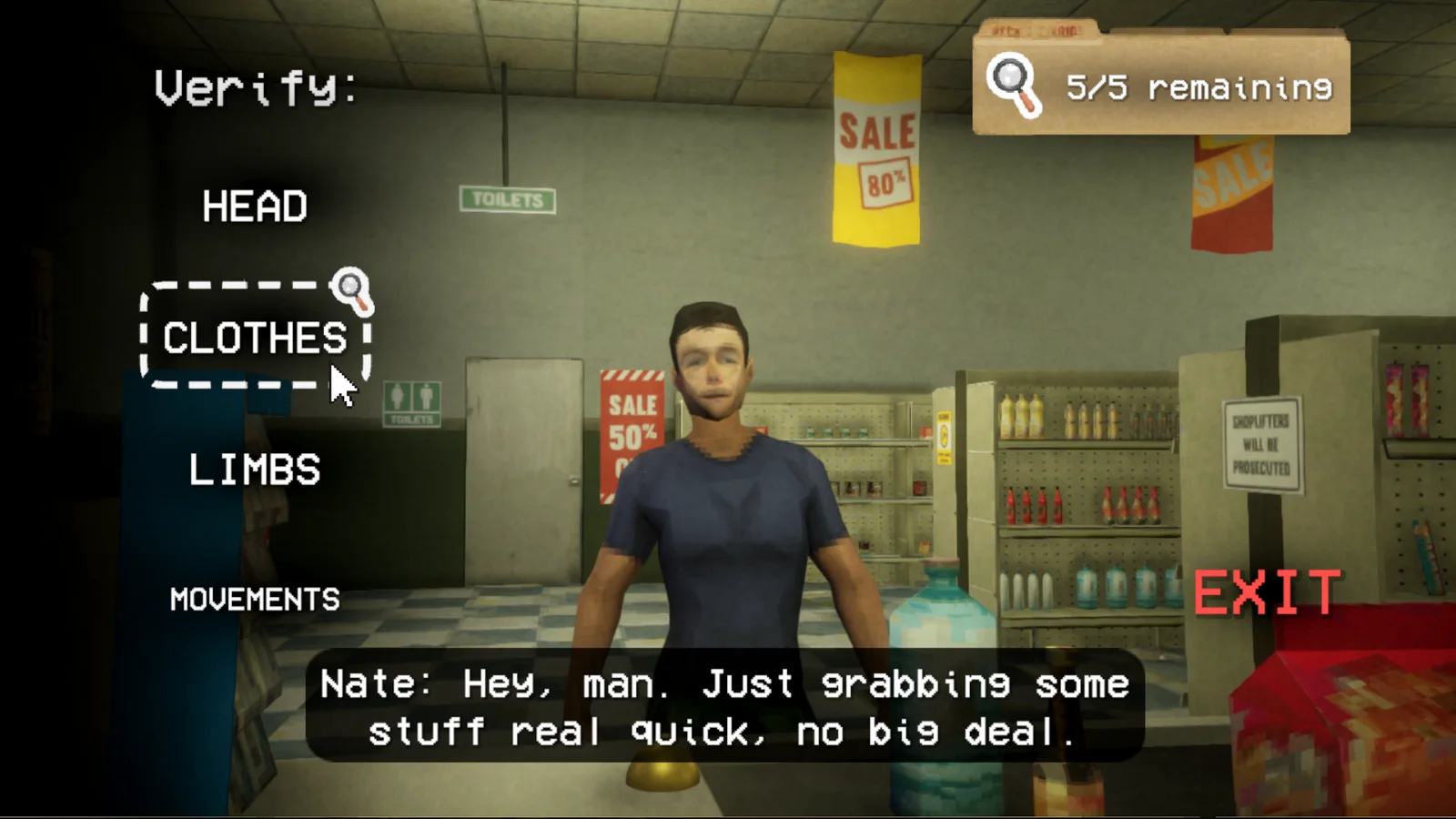
Use the same admission routine for every customer: read the paperwork, compare the computer record, ask one targeted question, watch behavior, and keep traps, barricades, doors, windows, hiding, and silence ready if a monster gets through.
Quick actions
Each route leads to a current table, a repeatable first-session step, or a recovery flow.
Current blockers
Start from the problem you can name, then take the smallest safe next action.
Hold admission and compare the exact field with the computer record before spending another question.
Use one targeted follow-up and watch whether the answer or behavior changes under pressure.
Switch from investigation to containment. Traps, barricades, closed routes, hiding, and silence now matter more than the next customer.
First shift route
Do not improvise a new check order for every customer. A fixed order makes contradictions easier to notice and gives a co-op team a shared callout language.
Compare visible identity details before the conversation creates a bias.
Check the same fields in the database and name the exact mismatch out loud.
Choose a question that can confirm or break the current story instead of repeating a weak cue.
Treat a behavior change as another signal, not automatic proof by itself.
One player owns the final door decision so the team does not undo its own evidence work.
Game systems
The useful split is evidence ownership, not three people asking the same customer the same question.
| System | Player job | First move |
|---|---|---|
| Paperwork | Read the ID and call out the exact field under review. | Start before questioning. |
| Computer | Compare the database record and preserve the contradiction. | Repeat the mismatched field. |
| Questioning | Spend the limited follow-up on the strongest unresolved doubt. | Ask for one falsifiable answer. |
| Defense | Keep traps, doors, windows, and the hiding route ready. | Prepare before a breach. |
Risk board
When a row says “Check in game,” confirm it before spending rare resources or changing an important save.
Guide directory
Choose the route, comparison, or tracker that matches what you need to do next.
Player questions
Answers reflect the current status and check date shown on this hub.
Yes. It supports solo play and online co-op for up to three players.
Compare paperwork and computer data, ask a targeted question, and use behavior as supporting evidence before the final admission call.
Stop normal service, deploy traps, barricade access, close the route into the hiding area, and reduce noise while the threat is active.
Treat behavior as one evidence lane. A factual contradiction across paperwork, computer data, or answers is a safer basis for the call.