

Paperwork, computer, questions, behavior
Shift at Midnight Customer Anomalies
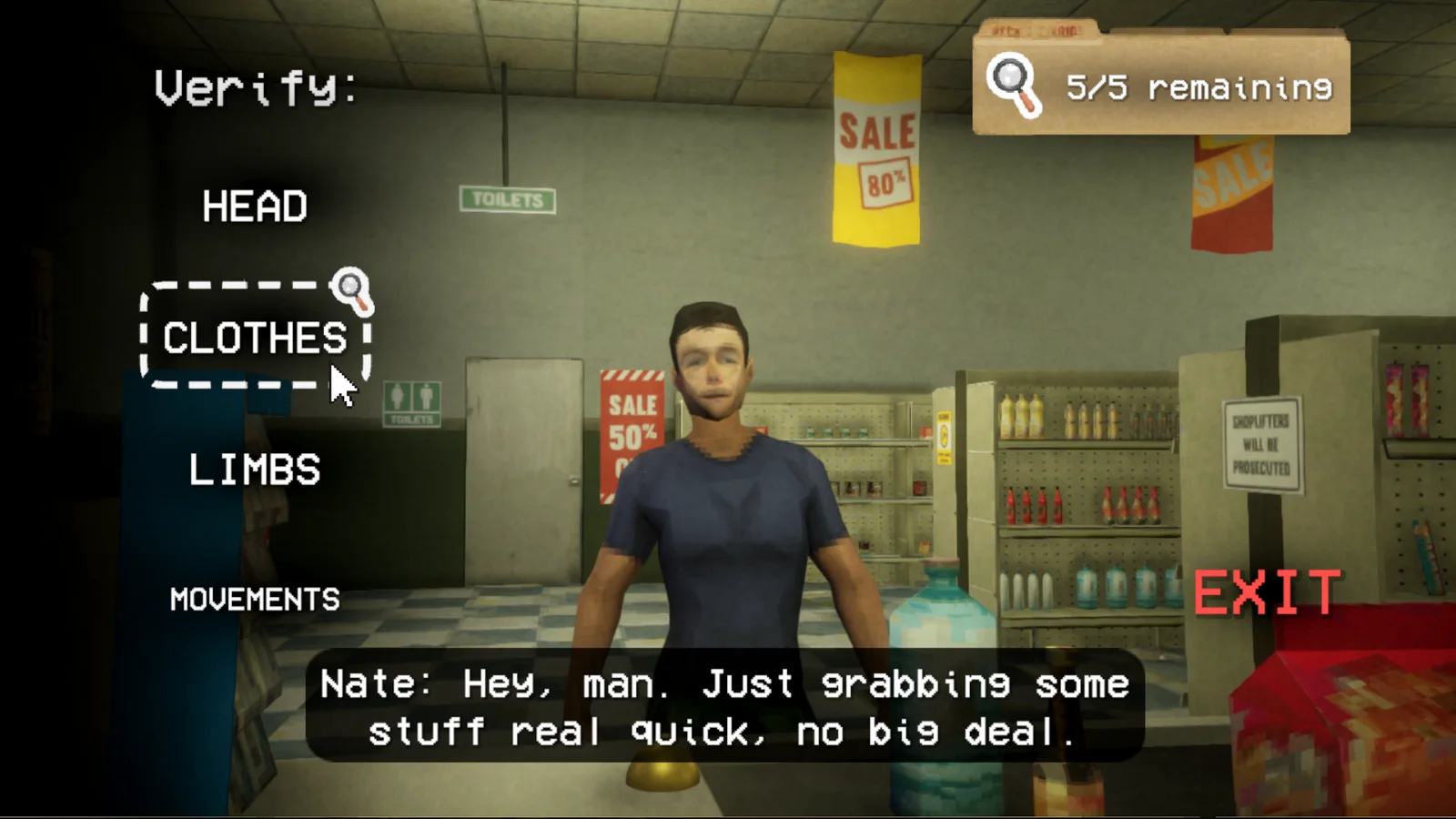
Customer evidence and breach recovery database
Shift at Midnight Customer Anomalies & Recovery
Use the finder to combine paperwork, computer records, targeted answers, and behavior before admission. If a monster gets through, stop service and switch to the saved trap, barricade, closed-route, hiding, and silence recovery flow.
Keep one final admission owner
Trap, barricade, hide, stay quiet
Evidence Finder
Customer evidence finder
Use the finder to combine paperwork, computer records, targeted answers, and behavior before admission. If a monster gets through, stop service and switch to the saved trap, barricade, closed-route, hiding, and silence recovery flow.
8 matches Customer evidence finder
Customer signal · Paperwork
Current version Paperwork field mismatch
A visible ID detail conflicts with the expected record.
- Check next
- Matching computer field
- Team callout
- Say the field, not only “bad ID”
Player job
Verify the exact field instead of judging the whole document at a glance.
Use now
Name the mismatched field and open the matching computer entry.
Safe next action
Hold admission until the same identity detail is cross-checked.
Risk
A fast visual read can turn two similar fields into a false call.
Customer signal · Computer
Official info Computer record conflict
The database does not support a detail shown or stated by the customer.
- Check next
- Targeted question
- Team callout
- Record says… / customer says…
Player job
Preserve the contradiction for the final admission decision.
Use now
Read the conflicting value aloud and choose one follow-up that tests it.
Safe next action
Do not open the door while the record conflict is unresolved.
Risk
Closing the database without naming the conflict makes co-op evidence easy to lose.
Customer signal · Questioning
Current version Answer conflicts with the record
A targeted answer breaks the paperwork or database story.
- Check next
- Repeat the contradiction once
- Best use
- Confirm an existing doubt
Player job
Use the answer as corroborating evidence, not an isolated hunch.
Use now
Compare the answer with the exact record field already under review.
Safe next action
Hold admission and prepare the rejection or defense route.
Risk
A broad question can produce an ambiguous answer that proves nothing.
Customer signal · Questioning
Player report Story changes under follow-up
The customer gives incompatible answers across the same line of inquiry.
- Check next
- Paperwork or behavior support
- Best use
- Break a polished story
Player job
Separate a changed fact from a merely different phrasing.
Use now
State both versions before the final call.
Safe next action
Treat a clear changed fact as a strong reason to hold admission.
Risk
Repeatedly grilling a customer without a target wastes limited questioning.
Customer signal · Behavior
Player report Visible non-human cue
A physical or behavioral cue clearly departs from a normal customer presentation.
- Check next
- Defense readiness
- Team callout
- Cue and location
Player job
Keep distance and make sure the defense route is ready.
Use now
Use the cue with the current paperwork and record evidence.
Safe next action
Hold admission; assign one player to containment before the final call.
Risk
Crowding the door can leave the team with no clean retreat.
Customer signal · Behavior
Player report Behavior changes during questioning
The customer presentation changes after a targeted check.
- Check next
- Strongest factual contradiction
- Evidence weight
- Supporting cue
Player job
Decide whether the change supports a known contradiction.
Use now
Pair the behavior with the strongest paperwork or answer signal.
Safe next action
Cross-check before admitting; behavior alone remains a weaker call.
Risk
Treating ordinary nervousness as automatic proof creates false positives.
Customer signal · Admission
Current version All current checks align
Paperwork, computer record, answers, and behavior do not produce a contradiction.
- Check next
- Door and floor state
- Evidence weight
- No contradiction found
Player job
Finish the routine instead of inventing a new test from anxiety.
Use now
Confirm the defense player is ready, then make one admission call.
Safe next action
Admit carefully and return to the same check order for the next customer.
Risk
Endless extra questioning can consume the shift without improving the evidence.
Recovery flow · Containment
Official info Monster breach response
A threat has entered and the evidence phase is over.
- Priority
- Trap → barricade → hide
- Do not do
- Continue normal service
Player job
Convert the store from service space into a containment and hiding route.
Use now
Stop chores, deploy traps, barricade doors or windows, close routes, and hide.
Safe next action
Stay quiet and let one player call movement while the threat is active.
Risk
Proximity voice can reveal the team during an attack.
No matching customer signal
Try a broader cue such as paperwork, question, behavior, computer, trap, or breach.
Failure recovery
Recover after a bad admission
Once a monster is inside, another customer check is not the priority. Restore a defensible route first.
- 1Call the breach
Stop normal service and tell every player which side of the store is unsafe.
- 2Place the trap route
Use prepared traps between the threat and the team rather than scattering them at random.
- 3Barricade access
Close doors and windows that create a direct path into the hiding area.
- 4Hide and reduce noise
Move to the chosen refuge, stay quiet, and wait for a clean recovery window.
Decision table
Use the strongest unresolved contradiction
Use the action column as the next test, not as a claim about hidden game values.
| Situation | Action | Why |
|---|---|---|
| One weak cue | Cross-check | A vague behavior or impression is not enough by itself. |
| Two independent contradictions | Hold admission | The story has failed in more than one evidence lane. |
| No contradiction after the full routine | Admit carefully | More random questions add time without a clearer decision. |
| Threat already inside | Contain and hide | Survival now outranks investigation. |
Player questions
Customer Anomalies FAQ
Use the current game panel before spending rare resources on a value that can change.
What evidence should I check first?
Start with paperwork, then compare the same fields in the computer record before asking a targeted question.
Is behavior enough to reject a customer?
Treat behavior as supporting evidence. Factual contradictions across records or answers produce a safer call.
What does Reset clear?
Reset clears search, filters, saved signals, and the stored state for this finder.
Does the table work without JavaScript?
Yes. Every evidence and recovery row remains visible; JavaScript adds filtering and saved state.