

Palworld Game Home
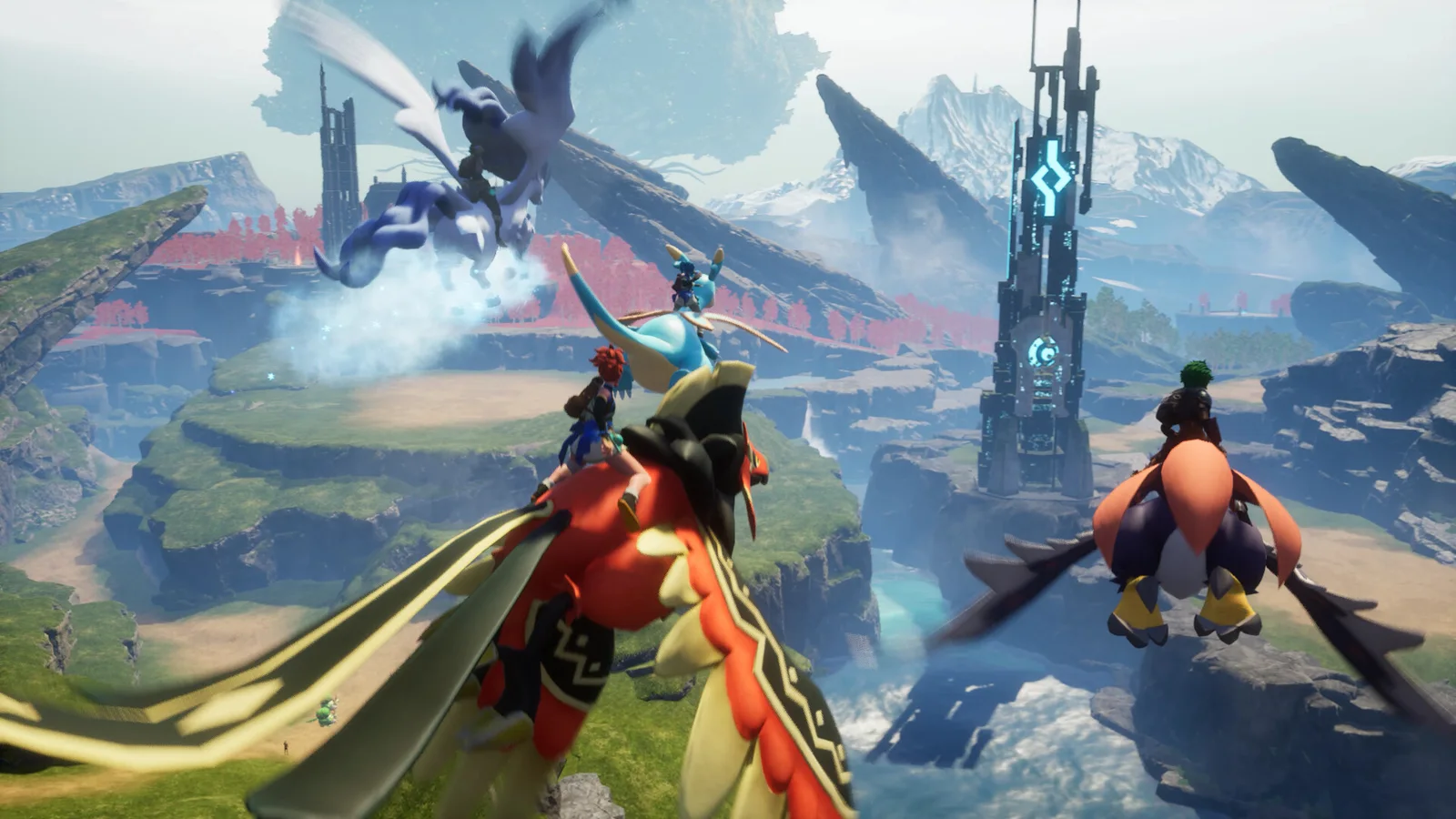
Backup, mission, map, party, base, and settings checklist
Palworld 1.0 Old Save Checklist
Create a recovery copy before the first 1.0 load, record world settings, rebuild the mission route, re-open the map, audit Partner Skills and one base cycle, test a familiar fight, and save a new baseline before deep progression.
What this page is for
A ten-check return path that protects an old world while isolating every changed system.
Use the page in three moves
Query first, test second, recover cleanly
Palworld 1.0 old-save checklist is a server-rendered reference with a light selector layered on top. Start from the named blocker, narrow once, and leave the full answer visible when a filter would hide useful context.
- 01Name the job
Start with the player problem, then use the search a backup, mission, map, party, base, or setting check control instead of scanning every row.
- 02Read one matching record
Use the palworld 1.0 old-save checklist result to compare the job, fields, confidence, and safe next action before changing another variable.
- 03Verify the live result
Run the smallest test that can disprove the current plan, keep the baseline you can reproduce, and record the exact condition that changes your next move.
Covered on this pageBefore open · First load · System audit · Return ready
Best first queryCreate a recoverable world backup
If nothing matchesNo matching old-save check
Protect the world before testing it
An old save needs a baseline before it needs a rebuild
Version 1.0 touches missions, map orientation, Partner Skills, work balance, combat, and settings. The safest return is an audit that preserves the first known-good comparison.
Make the recovery copy before opening the updated world, then record the settings that change loss and travel risk. This gives the rest of the audit a stable starting point and prevents a one-time load or an automatic migration from becoming the only state you can inspect.
On the first load, check the mission log and map before changing the party or base. Mission progress and older random-spawn assumptions can move at the same time, so following a remembered route may send you toward a marker or habitat that no longer represents the current world.
Next, audit one party job and one base cycle. Re-read Partner Skills slot by slot, then watch one input-to-output handoff at the base. A changed skill or work balance may be local; replacing the whole team and layout together removes the clue that would have told you what actually changed.
Only after those checks pass should the save enter the new 1.0 content loop. Keep the old systems that still complete their job, retest the changed dependency, and rebuild one connected lane when the old assumption is genuinely invalid.
- CopyPreserve a separate recovery world before the first load.
- OrientRead missions, settings, and map before rebuilding systems.
- IsolateChange one party or base dependency at a time.
Use the update notes as questions
A patch list becomes useful when each change has a pass condition
The important question is not whether a system was mentioned in the update, but whether your world still completes the player job it was built to do.
For missions, the pass condition is a current marker and a readable next objective. For the map, it is a route you can reach with the current travel network. For Partner Skills, it is a party slot whose job still works without relying on an old stacking interaction.
For the base, follow one item from input to production, output, hauling, food, rest, and storage. If the first broken handoff is a full output point, adding another producer is the wrong fix even when the worker’s suitability looks strong. The observed cycle is more useful than an old value taken from a spreadsheet.
For combat, pick a familiar encounter and compare movement, commands, damage uptime, and recovery. Do not use new endgame content to diagnose an old assumption; a known fight gives you a controlled benchmark before the level cap and new systems add more variables.
Write the pass condition next to every check. A saved note that says “map okay” is hard to revisit; “activated the nearest watchtower and returned to the base Palbox with the same supplies” can be tested again after a hotfix.
- MissionConfirm the current marker and next objective.
- BaseTrace one complete input-to-output cycle.
- CombatBenchmark one familiar fight before new content.
Know when the save is ready
Return to new content only after the old loop is explainable
The audit ends when the world has a current baseline, not when every 1.0 feature has been opened at once.
A ready save has a recoverable copy, current mission and map answers, a party with distinct jobs, a base that can complete a visible cycle, and settings whose death and travel behavior you understand. If one lane is still unclear, keep it in the audit rather than spending rare resources around a guess.
Choose one new goal after the baseline holds: the level 80 climb, a five-capture bonus, the 48-Pal condensation requirement, Awakening, Mutation, a new weapon lane, or the World Tree route. The goal should be specific enough that you can tell whether the new system changed the route.
When an old dependency fails, rebuild only that connected section and save a new baseline. This preserves working production, a proven party, and the comparison needed for the next update. A complete teardown is a last resort, not the default response to a large patch.
The result is a return path that remains useful as the live world changes. The checklist tells the player what to verify; the database and tools can then expose stable Pal, work, and progression relationships without pretending every old value survived unchanged.
- ReadyConfirm mission, map, party, base, and settings together.
- ChooseEnter one new progression lane at a time.
- BaselineSave again after the verified systems work together.
Visual reference
See the game context before making the lookup
These local game scenes establish the situation this page addresses. They support orientation only; the actionable answer remains in the text, fields, and recovery route below.
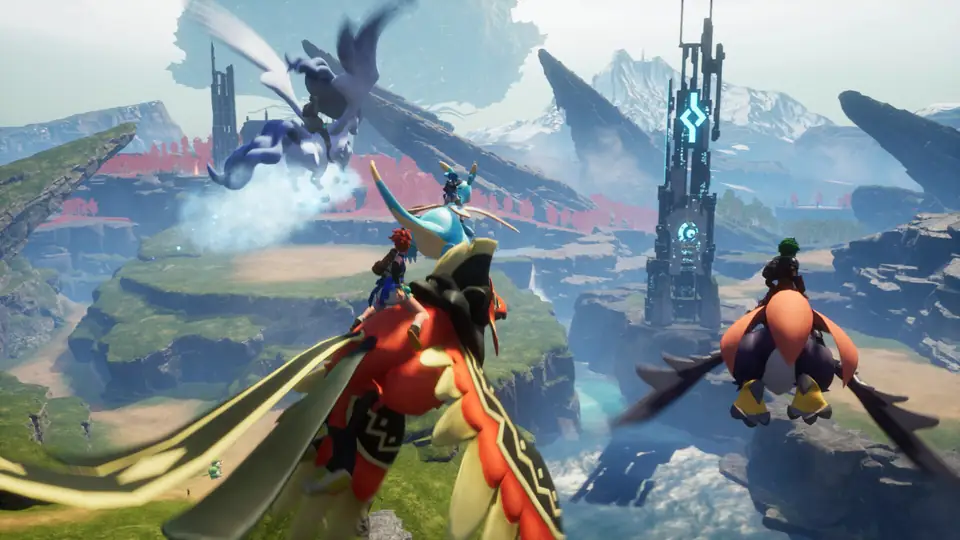


Backup through new baseline
Missions, spawns, skills, base, settings
Keep the cause of every fix visible
Save Checklist
Palworld 1.0 old-save checklist
Create a recovery copy before the first 1.0 load, record world settings, rebuild the mission route, re-open the map, audit Partner Skills and one base cycle, test a familiar fight, and save a new baseline before deep progression.
10 matches Palworld 1.0 old-save checklist
Old-save check · Before open
Create a recoverable world backup
Version 1.0 changes several systems that are written back into an existing world.
- Return stage
- Before open
- Old-save impact
- Save safety
- Pass condition
- Keep a separate recovery copy before the first 1.0 load.
Player job
Protect the old world while checking save safety.
Use now
Keep a separate recovery copy before the first 1.0 load.
Safe next action
Complete and record this check before changing another affected system.
Risk
Using the only save as the experiment removes the clean rollback point.
Old-save check · Before open
Record the current world settings
New or reset Normal worlds use safer equipment-drop behavior, while an old world may retain earlier settings.
- Return stage
- Before open
- Old-save impact
- Settings
- Pass condition
- Capture the current death, spawn, difficulty, and multiplayer settings before changing them.
Player job
Protect the old world while checking settings.
Use now
Capture the current death, spawn, difficulty, and multiplayer settings before changing them.
Safe next action
Complete and record this check before changing another affected system.
Risk
Assuming the new default applied can make death-risk advice wrong.
Old-save check · First load
Read the rebuilt mission log
Main and sub-mission progress was reset, with some tutorial and Tower Boss completion restored from recorded defeat state.
- Return stage
- First load
- Old-save impact
- Missions
- Pass condition
- Open the mission log and select the first current marker instead of following an old checklist.
Player job
Protect the old world while checking missions.
Use now
Open the mission log and select the first current marker instead of following an old checklist.
Safe next action
Complete and record this check before changing another affected system.
Risk
Old route notes can point to a mission state that no longer exists.
Old-save check · First load
Re-open the expanded map
Sunreach, the World Tree, Watchtowers, settlements, ruins, islands, and revised habitats change orientation.
- Return stage
- First load
- Old-save impact
- World map
- Pass condition
- Activate nearby orientation points and confirm the current route before a long expedition.
Player job
Protect the old world while checking world map.
Use now
Activate nearby orientation points and confirm the current route before a long expedition.
Safe next action
Complete and record this check before changing another affected system.
Risk
Old fast-travel memory does not cover the expanded world.
Old-save check · System audit
Retest random-spawn habitats
Placement data from older random-spawn worlds is not carried forward after the habitat rebalance.
- Return stage
- System audit
- Old-save impact
- World map
- Pass condition
- Re-scout the route used for important capture or farming loops.
Player job
Protect the old world while checking world map.
Use now
Re-scout the route used for important capture or farming loops.
Safe next action
Complete and record this check before changing another affected system.
Risk
Following an old spawn loop can waste travel time even when the world loads correctly.
Old-save check · System audit
Re-read every active Partner Skill
More than 200 Partner Skills changed and most same-Pal stacking was restricted.
- Return stage
- System audit
- Old-save impact
- Party
- Pass condition
- Give every party slot one current exploration, combat, or support job.
Player job
Protect the old world while checking party.
Use now
Give every party slot one current exploration, combat, or support job.
Safe next action
Complete and record this check before changing another affected system.
Risk
An old stacked team can lose its core benefit without appearing obviously invalid.
Old-save check · System audit
Observe one complete base cycle
Work Suitability reaches level 10 and every Pal received work-balance changes.
- Return stage
- System audit
- Old-save impact
- Base
- Pass condition
- Watch production, hauling, breaks, and the first idle or blocked handoff before restaffing.
Player job
Protect the old world while checking base.
Use now
Watch production, hauling, breaks, and the first idle or blocked handoff before restaffing.
Safe next action
Complete and record this check before changing another affected system.
Risk
Rebuilding the whole base hides the first changed dependency.
Old-save check · System audit
Test one familiar fight
Movement, active skills, weapons, Tower Bosses, and Pal balance changed together.
- Return stage
- System audit
- Old-save impact
- Party
- Pass condition
- Use a known encounter to test damage uptime, movement, commands, and recovery.
Player job
Protect the old world while checking party.
Use now
Use a known encounter to test damage uptime, movement, commands, and recovery.
Safe next action
Complete and record this check before changing another affected system.
Risk
A new endgame fight cannot reveal which old assumption failed.
Old-save check · Return ready
Save the new known-good baseline
The audit is complete when mission, map, party, base, and settings all have a current answer.
- Return stage
- Return ready
- Old-save impact
- Save safety
- Pass condition
- Create a fresh recovery point after the verified systems work together.
Player job
Protect the old world while checking save safety.
Use now
Create a fresh recovery point after the verified systems work together.
Safe next action
Complete and record this check before changing another affected system.
Risk
Continuing without a new baseline makes later hotfix or mod problems harder to isolate.
Old-save check · Return ready
Enter level 80 content after the audit
Version 1.0 adds a higher cap, new technology, new Pals, Awakening, Mutation, weapons, and world routes.
- Return stage
- Return ready
- Old-save impact
- Missions
- Pass condition
- Choose one new progression goal only after the old loop is stable.
Player job
Protect the old world while checking missions.
Use now
Choose one new progression goal only after the old loop is stable.
Safe next action
Complete and record this check before changing another affected system.
Risk
Starting every new system at once can consume resources before the save is understood.
No matching old-save check
Try backup, mission, map, party, base, settings, or remove one filter.
When the answer does not fit
Recover when the old world feels broken everywhere
Restore the cleanest available baseline and audit the save in separate lanes.
- 1Preserve the current state
Do not overwrite the remaining recovery point while the cause is unknown.
- 2Check mission and settings first
These change the route and the risk assumptions before combat or production begins.
- 3Separate party from base
Re-read Partner Skills, then run the base without changing both systems together.
- 4Create a new baseline
Save again only after the known systems pass their current checks.
Decision table
Choose what to keep, retest, or rebuild
Choose the row that matches the failure in front of you; the action is a bounded next experiment, not a hidden-stat guarantee.
| Situation | Action | Why |
|---|---|---|
| The old system still completes its job | Keep it | A changed patch note does not require a rebuild when the result remains sound. |
| The rule changed but the outcome is unclear | Retest it | One controlled cycle exposes the real impact. |
| The old dependency no longer exists | Rebuild that lane | Partner Skill stacking and work balance can invalidate the old design. |
| The save or setting result is uncertain | Restore and verify | Irreversible progress deserves a recovery path. |
Share this guide
Send the answer when another player hits the same blocker.
Share the current Palworld route, or copy the link for Discord and group chat.
Player questions
Old Save Checklist FAQ
Use the current game panel before spending rare resources on a value that can change.
Should I back up before opening Palworld 1.0?
Yes. Keep a separate recovery copy before the update writes current mission, world, party, and base state.
Why did mission progress change?
Main and sub-mission progress was reset for reward fairness, with some completion restored from recorded defeat state.
What should I test first at the base?
Observe one complete production cycle before changing layout or staffing.
When is the old world ready for new content?
After missions, map, party, base, combat, and settings all have a verified current baseline.