

Fields of Mistria Game Home
Start here · Fields of Mistria
Fields of Mistria First-Week Checklist
Secure the crop loop, name one opening objective, open one useful route at a time, and leave optional collecting or clearing for a day when it does not compete with progress.
Start here
Use the first week to open options, not to finish every system
A first-week checklist is strongest when it protects the farm baseline while opening the tools, town routes, and collection habits that make later days easier to read.
Direct answerSecure the farm loop, open one useful tool or route at a time, carry one request or museum handoff, and leave stamina for the next day instead of clearing every visible task.
Route system
Farm first → name the blocker → choose one fitted stop
Fields of Mistria becomes easier to manage when a day has one reason. Use the databases below to fill that reason with a confirmed source, item, crop, recipe, or mine target.
Secure the farm loop
Handle the essential crop and homestead actions that protect tomorrow before optional cleanup.
Name one progression job
Choose a restoration, request, purchase, craft, unlock, or material target that changes the next option.
Use one database handoff
Trace the blocker to its season, source, ingredient, or mine family before you commit the day.
Set a return rule
Use time, stamina, health, inventory, or travel margin to stop a route before it breaks the baseline.
Opening sequence
Open the next option before chasing completion
The first week presents crops, tools, town requests, fishing, bugs, forage, and mine access at the same time. Treat the week as a sequence of small unlocks rather than a scorecard. Start with the farm action that keeps tomorrow possible, then name the one option you want to make easier next: a tool route, a town handoff, a collection condition, or a material source. Use the relevant record to check what is already confirmed, close that handoff, and stop before a second system turns the day into travel noise. A completed first-week objective is the one that changes the next morning, not the one that touches the most menus.
Farm baseline
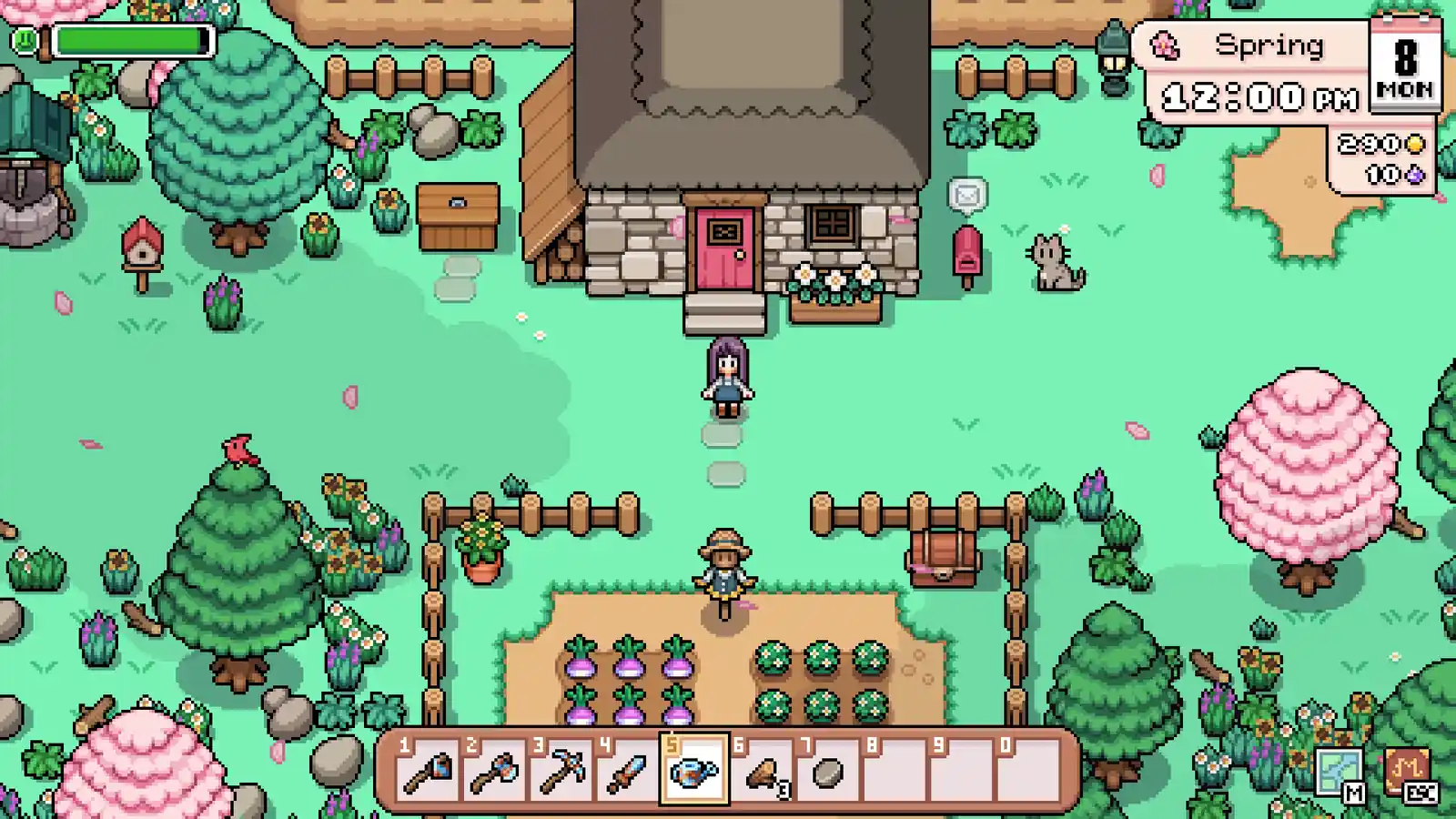
Make crops the anchor, even on a busy opening day
The crop database and planner are useful because they keep the planting decision visible while the rest of the map competes for attention. Check the current season and listed growth window, then plant only the plots that fit the next few days you can actually support. Do not spend the opening week clearing every tile or planting a field you cannot water consistently. If a request, restoration input, or collection specimen is uncertain, reserve one confirmed copy and keep the rest of the route reversible. The farm loop is not a delay before the “real” systems; it is the baseline that makes each later experiment readable.
Route handoff
Pair one town or collection job with the day you already need
After the farm loop, choose one nearby handoff that changes the next decision. A character visit can ride on a restoration or purchase trip; a fish or bug attempt can share a collection route; a forage stop can answer a recipe or material blocker. Use the Characters, Fish, Bugs, Forageables, and Materials records to narrow the target before leaving. Season, location, time, and weather are route constraints, not decoration. When the conditions do not fit today, keep the target visible and postpone it cleanly instead of crossing the map to force a low-confidence result.
Carry-forward
End each early day with one known next action
The first week becomes much easier when the next morning does not begin with a blank slate. Before ending the day, note what completed, what remains blocked, and which single action is allowed to change tomorrow. Keep the item tied to a request, museum set, craft, or upgrade until its current use is clear. If stamina, time, or travel margin collapsed, restore the farm baseline first and shrink the next objective. This creates a useful recovery loop: the save keeps its progress, the route keeps its context, and the next attempt changes one dependency instead of rebuilding the entire week.
Opening sequence
Open the next option in an order you can repeat
The first week has more visible systems than one save can optimize at once. Use each day to make one route easier to read on the next day.
- 1Make the farm readable
Clear only the space needed for crops and essential actions. Keep optional debris from consuming the stamina that should establish the first reliable loop.
- 2Open one useful route
Choose a tool, town handoff, fishing stop, gathering source, or collection habit that answers the most immediate blocker rather than unlocking several unrelated chores.
- 3Trace the record before travelling
Search the crop, character, fish, bug, forageable, or material record first. Match season, location, time, weather, or use so the trip has a finish condition.
- 4Protect one shared resource
Reserve the confirmed crop, request input, museum specimen, or craft material that could solve the next handoff. Unknown quantities stay unknown.
- 5Leave a carry-forward note
Before ending the day, keep the next objective visible and preserve any item whose use is still uncertain. Early progress is stronger when the next morning starts with a known decision.
Decision checks
First-week priority checks
Use the row that matches the current constraint, then keep the next test small enough to explain.
| Situation | Action | Why |
|---|---|---|
| The farm needs more space | Clear the next required tiles only. | Targeted clearing creates capacity without spending the day on a cosmetic reset. |
| Several systems are available | Choose the one that changes tomorrow’s route. | A useful unlock or handoff compounds into the next decision; a broad tour usually does not. |
| A route target has several conditions | Check the record before leaving. | Season, location, time, weather, and use can make a nearby-looking target the wrong trip today. |
| An item could solve two jobs | Reserve one confirmed copy. | Keeping the first copy protects requests, museum progress, crafting, and upgrades while the priority becomes clear. |
| Stamina is already low | Finish a nearby action or return. | The first week rewards a repeatable baseline more than a risky final detour. |
When the lookup does not fit
Keep the last completed loop and shrink the next decision
Unknown, empty, or conflicting results are a reason to narrow the route—not a reason to invent a value.
Reset the filters, try the item’s shorter name, then check whether the target belongs to a different collection page.
Keep the route reversible. Use the confirmed fields that remain and verify the missing condition in the live game before committing stamina.
Stop optional work, protect the farm or current objective, and carry the unfinished lookup into the next compatible day.
Natural next step
Stay inside the same decision loop
Open the next page when it changes the source, relationship, calculation, or recovery action.
Share this guide
Send the answer when another player hits the same blocker.
Share the current Fields of Mistria route, or copy the link for Discord and group chat.
Player questions
First-Week Checklist FAQ
What should I prioritize during the first week?
Protect the farm loop, choose one progression objective, and use a nearby town, tool, fishing, or gathering stop only when it answers that objective.
Should I clear the entire farm immediately?
No. Clear the space needed for current crops and essential actions, then postpone optional debris until the route has room for it.
How do I avoid wasting early stamina?
Name the day’s job before leaving the farm and set a return point before a longer town, fishing, gathering, or mine route.